Autumn is a well known daisy season with displays of the herbaceous prairie daisies; aster, helenium, helianthus, stealing the limelight in many gardens. The majority originate from moist meadows with deep rich soil and in the main do poorly here - the garden is just too dry. For autumnal daisy-ness here I have been enjoying for weeks the re-flowering of two exotic shrubs from South Africa, the Kingfisher Daisy, Felicia amelloides, and the African Bush Daisy, Euryops chrysanthemoides, both coming into flower after the first rains of autumn.

The Kingfisher daisy is a small sub-shrub about a foot high and it makes a loose sprawling mound covered with bright blue, yellow-eyed daisies over a long period. It is sold for summer bedding and hanging baskets and will flower throughout summer if it stays regularly moist and is dead-headed frequently. Here it grows in a tub with a blue fescue grass and some tree sedum, Sedum praeltum, with stone filled rubbish soil and never receives enough water to keep on flowering. I don't mind when it shuts up shop at the start of summer as I know it will freshens up when the weather cools in autumn just when the intense blue flowers will be most admired. It is not fully hardy but has been growing outside here for five years, no doubt the dry, free-draining tub helped it with the freezing temperatures of last winter when others growing in heavier soil elsewhere in the garden turned up their toes. Easily rooted from cuttings they are good doers in sunny containers.

(my camera doesn't 'like' blue in low autumn light - they are much brighter and a purer blue than they look here).
Migrainingly intense in bright summer sun the large yellow daisies of the African Bush Daisy seem to my eye to be better suited to the grey days of autumn - not that I have any say in the matter as they flower non-stop except when too cold or too dry. Another plant sold as disposable summer bedding they will make permanent shrubs in sheltered, well drained sites. It is incredibly drought tolerant when established as you would expect with its South African roots (few plants can sit unpotted and forgotten under a bench all summer to grow away untroubled when finally planted - this can) it is also surprisingly cold-hardy, only showing its displeasure in winter by flushing an unhappy bronze (which is rather attractive anyway).

The largest bush at the Phoenix has made a big dense mound six foot across and nearly as tall in five years. In full flush it will be covered in hundreds of 6cm flowers. To keep it tidy I deadhead as best as I can (it is tiresome), without this attention it will still flower on and on but it does get annoyingly messy. Deadheading involves snipping each separate flower head off at the base of the stalk. If the heads are just pulled off the stalks remaining dry to knuckle-stabbing sharpness and you will have pin-cushion hands next time you go in, if you shear it the new buds growing beneath get snipped off too, so it must be one by one but it is worth the trouble.
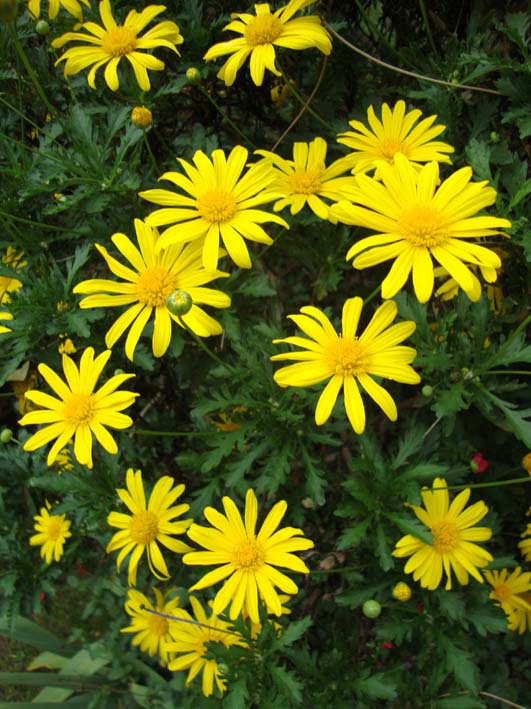
These bushes have been repeated through the garden for their reliable, if brassy, flowering and lumpy mounded forms and they visually tie the garden together, particularly at this time of year when they glow in the low autumn light.

These two daisies may be far flung from their exotic beginnings but they are good doers in this city garden. Grow them.


